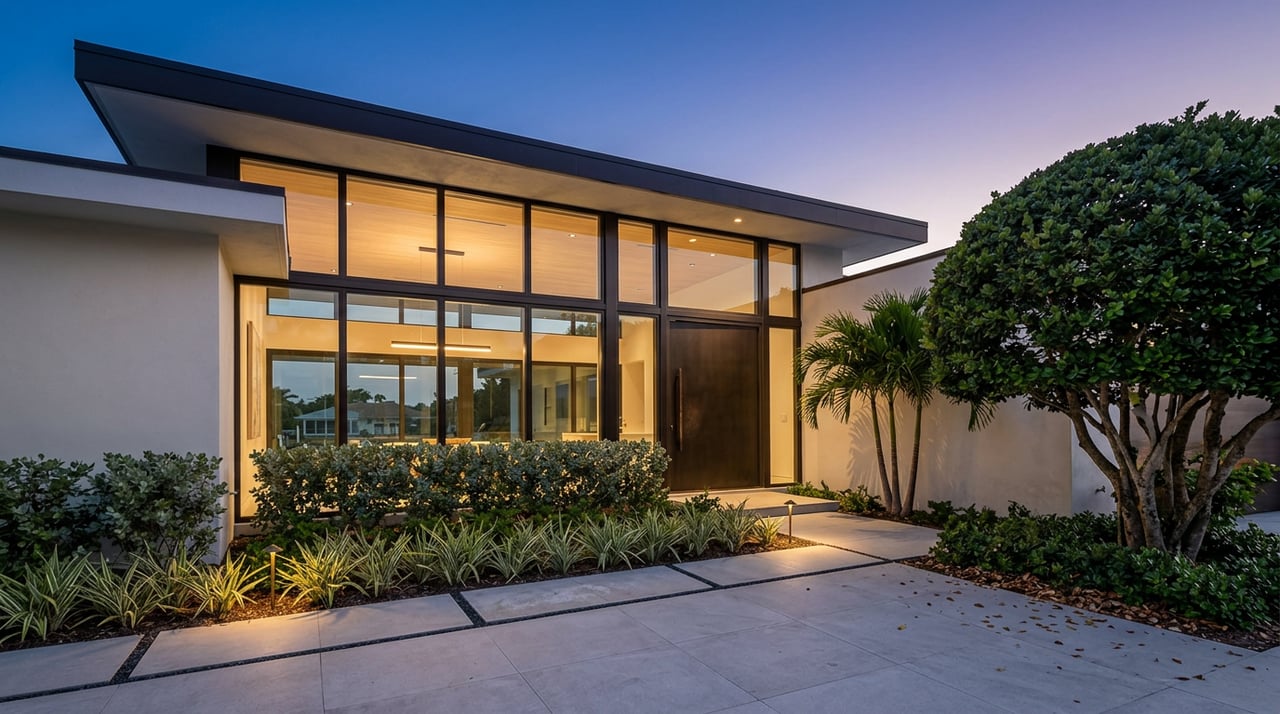
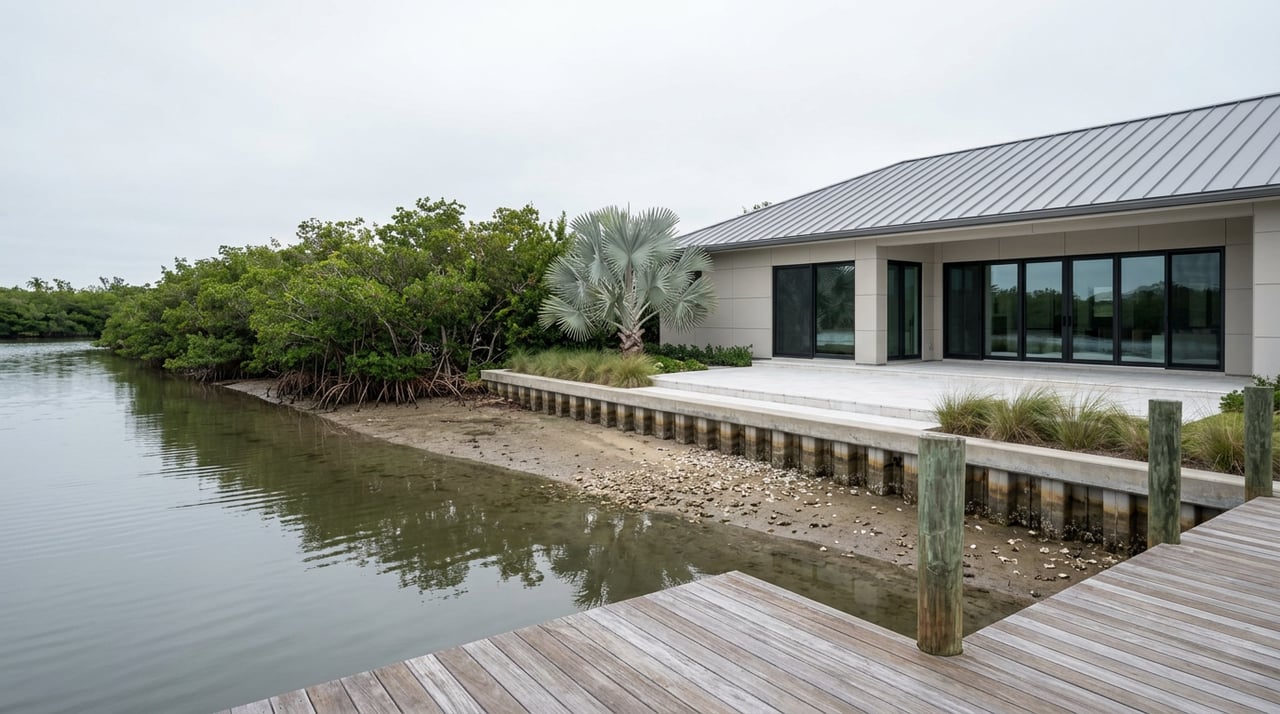
Two beachfront buildings sit on South Collier Boulevard, both facing the same stretch of Gulf sand, both selling two and three bedroom units in a similar price band this year. The Madeira, at 350 South Collier, went up in 2006, the last beachfront condominium built on the island. The Somerset, at 780 South Collier, went up in 1990. Sixteen years apart on paper. In practice, that gap is the single most important number a buyer comparing the two should ask about, and it has nothing to do with square footage, floor plan, or view.
That gap is what Florida's 2022 to 2025 condo reforms turned into a financial dividing line. And it explains something that's been genuinely confusing anyone trying to read the Marco Island market this year: the reports don't agree with each other.
Three reports, same market, three different stories
Pull up the Marco Island Area Association of Realtors' own comparison of June 2025 to June 2026 and the story is inventory tightening, condo sales strengthening, and homes appreciating, with faster sales times across most property types, condos included. Pull the Florida Realtors SunStats release for July 2026, folded into the Naples Area Board of Realtors' August 21 report, and Marco Island's median sale price is down 30.8 percent year over year, based on 78 closings. Check a live, daily-updated MLS dashboard from early August 2026 and the median is $1,425,000, up 1.5 percent year over year, with the typical home going under contract in about 87 days and buyers negotiating roughly 11 percent off asking.
| What you read | Source and period | What it actually says |
|---|---|---|
| Local association comparison | Marco Island Area Association of Realtors, June 2025 vs. June 2026 | Lower inventory, condo sales up, faster closings |
| Statewide MLS data | Florida Realtors SunStats, July 2026 | Median down 30.8% year over year on 78 closings |
| Independent market dashboard | Live MLS-based tracker, early August 2026 | Median up 1.5% year over year, ~87 days to contract |
None of these sources made an error. A market built on 78 closings in a single month moves on small numbers. A handful of high-end estate sales or a cluster of assessment-driven condo listings closing at once can swing a median by double digits without a single property actually losing value. That's the honest answer for why a 30 percent swing and a 1.5 percent gain can both be true descriptions of the same island in the same season.
But the reports agreeing to disagree isn't the interesting part. The interesting part is what's actually driving the divergence underneath all three of them, and it isn't market sentiment. It's a Florida statute.
The law that split the condo market by construction year
After the Champlain Towers South collapse in Surfside in 2021, the legislature passed SB 4-D, refined it with SB 154, and finished the framework with HB 913, effective July 1, 2025. Together they created two requirements for condominium and cooperative buildings three or more habitable stories tall. First, a milestone structural inspection, timed to the building's age under Florida Statute 553.899, generally at 30 years, with some coastal jurisdictions applying a 25-year threshold. Second, a Structural Integrity Reserve Study, or SIRS, that catalogs eight major structural components and dictates how much an association must save for each one.
The reserve piece is the part that changed everyone's math this year. The Florida Department of Business and Professional Regulation says associations that existed on or before July 1, 2022 were required to complete their SIRS by December 31, 2025. According to Atesa Risk Advisors, as of January 1, 2026, boards lost the ability to vote to waive or underfund reserves for those eight components, full stop. For decades, plenty of associations kept dues artificially low by skipping that funding. That option is gone.
Here's where the Madeira and the Somerset stop being interchangeable comps. The Somerset, built in 1990, has already passed both the 25 and 30 year marks. Whatever its milestone inspection found, good or bad, is already known, already reported to owners, and already baked into whatever the board is charging or assessing today. The Madeira, built in 2006, doesn't hit even the earlier 25-year threshold until 2031. It's already required to have a SIRS and to fund reserves accordingly, since it existed before the July 2022 cutoff, but it has no Phase 2 inspection bill on the table yet, because it hasn't reached the age where that inspection is triggered.
That's the actual fault line on Marco Island in 2026. It isn't condo against single-family, though single-family homes under Chapter 720 HOA rules aren't subject to SIRS at all, which is its own reason houses have behaved more predictably than condos this year. Inside the condo market itself, it's pre-2001 buildings against post-2001 buildings, because that's roughly where the milestone inspection clock has or hasn't started ringing.
The financial gap this creates isn't abstract. Special assessments tied to milestone findings and reserve catch-up have run from $10,000 to over $100,000 per unit in older coastal buildings where deferred maintenance and salt-air corrosion had gone unaddressed for years. A buyer comparing a Somerset unit and a Madeira unit at similar list prices could be looking at two very different total cost of ownership pictures, and neither the median price nor the price per square foot will tell them that.
There's some relief on the insurance side, though it doesn't erase the assessment math. Citizens Property Insurance's approved rates took effect July 1, 2026, with multiperil policies down roughly 8.8 percent on average and wind-only policies down about 5.5 percent, applied at each policy's renewal date rather than retroactively. That helps the ongoing premium line. It does nothing for a board that already has a Phase 2 report in hand and a repair bill due.
I tell clients the same thing whether they're buying their first Marco Island condo or their fifth waterfront home: the certificate of occupancy date matters more than the renovation photos. A kitchen gets updated every ten years. A building's age against the milestone inspection clock doesn't reset.
What to actually ask before you write an offer
If you're comparing condos on Marco Island right now, the questions that matter aren't about finishes.
- Get the certificate of occupancy date, not the year of the last remodel. That date is what starts the milestone inspection clock.
- Request the completed SIRS and, if the building has reached its threshold age, the milestone inspection reports, both Phase 1 and Phase 2 if a Phase 2 was triggered.
- Ask whether the board has already voted on a special assessment, and whether it's fully levied or still being phased across multiple budget years.
- Compare the association's current reserve funding percentage against what the SIRS schedule actually calls for, not just the maintenance fee on the listing sheet.
- If you're looking at single-family homes instead, redirect the diligence toward seawall condition, dock permitting, and storm-hardening features, since Chapter 720 HOAs aren't subject to SIRS and the risk profile is entirely different.
According to Florida Condo Attorneys, Florida law also now gives buyers seven days to review an association's financial and inspection records before being bound to a purchase agreement, and SavingAdvice reports that associations with 25 or more units are required to post governing documents, budgets, and reserve studies where owners and prospective buyers can see them. Ask for those documents before you're deep into a contract, not after.
Frequently asked questions
Does the SIRS reserve rule apply to single-family homes on Marco Island? No. SIRS and milestone inspections apply to condominium and cooperative associations under Florida Statute Chapter 718. Single-family HOAs fall under Chapter 720 and aren't required to fund a SIRS, though many boards are raising dues in response to the same insurance and construction cost pressures hitting condos.
How do I find out if a specific building has already had its milestone inspection? Associations are required to distribute a summary of the milestone inspection report to owners within 45 days of receiving it. Ask the listing agent for the report directly before you write an offer rather than waiting for disclosure during the transaction.
Is Marco Island currently a buyer's market or a seller's market? It depends entirely on the segment. Water-access single-family homes have continued to move at a steadier pace this year. Condos in older buildings working through reserve catch-up have, in some cases, sat for 200 to 300 or more days. Treat any single headline number for the island as incomplete until you know which segment it's describing.
Marco Island's market data will keep contradicting itself as long as reporters keep averaging two very different products into one number. The way through it isn't a better headline. It's knowing which building you're actually looking at, and what year its clock started.
If you're comparing waterfront condos or homes on Marco Island and want someone to pull the actual SIRS and inspection history before you make an offer, Angelica Andrews offers a private consultation to walk through exactly that.
This article is general information, not legal, tax or financial advice. Consult a qualified professional about your situation.